
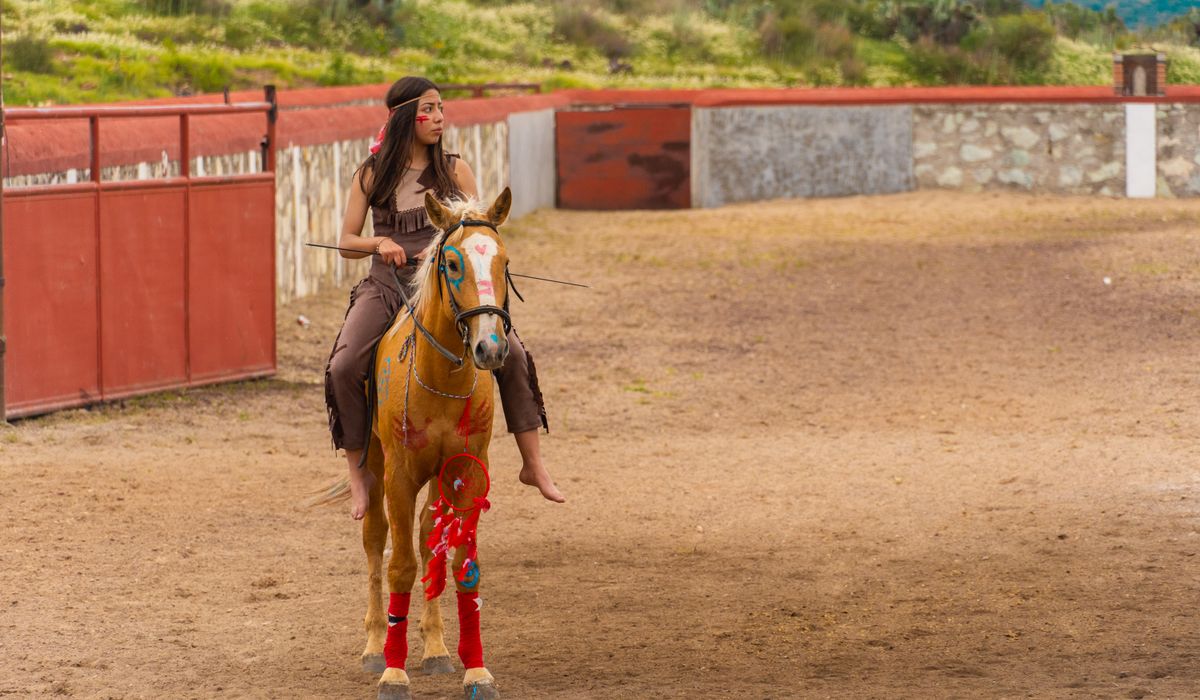
Building Confidence in a Nervous Young Horse
Start With the Horse You Actually Have
Every young horse arrives with a different set of life experiences, and a nervous youngster is not a broken one. He is simply telling you that the world has not yet proved itself safe. Before you plan a single session, spend a fortnight observing him properly. Note what he spooks at, how quickly he settles, whether he is worse in wind or rain, and which side he finds easier to handle. A horse who tenses at a flapping tarpaulin in the next field may be perfectly relaxed about traffic, and knowing the difference saves you from preparing for the wrong battle.
It helps to write this down. A simple notebook with dates and short entries — "spooked at the wheelbarrow, settled in 30 seconds" — will show you progress that day-to-day handling hides. Progress with a nervous horse is measured in weeks, not sessions, and having evidence of it keeps your own confidence steady, which matters more than most people realise.
Groundwork Builds the Foundation
Groundwork is where a nervous youngster learns that humans are predictable. Lead him in hand daily, in the same order of small tasks, until the routine itself becomes soothing. Walk, halt, walk on, stand, back up one step, walk on. Keep sessions to fifteen or twenty minutes and finish while he is still relaxed rather than pushing until something goes wrong.
Teach him to yield his shoulders and hindquarters away from light pressure on a rope halter or a well-fitted leather headcollar. This is not about domination; it is about giving him a way to answer a question he understands. A horse who can move his feet on request has somewhere to put his worry.
- Leading: walk beside his shoulder, not ahead pulling, and insist on a relaxed walk rather than a tight, jiggy one.
- Standing still: ask for two minutes of quiet standing, then build to five. This is harder for young horses than walking.
- Yielding: shoulders, then quarters, then a single step back, always releasing the moment he softens.
- Touch: run your hands over ears, belly and legs so grooming and rugs never become a fight.
Use a consistent voice command for each task. Horses learn tone and rhythm long before they learn words, and a calm, low "stand" repeated in the same way every time becomes genuinely reassuring.
Consistency Beats Intensity
A nervous horse thrives on sameness. Feed at the same times, turn out in the same field with the same companion where possible, and handle him in the same order each day. If you always groom before you lead out, he will start to anticipate the next step and relax into it. Changes to routine should be introduced one at a time, never alongside a new object or a new location.
Keep your own body language steady. Nervous handlers create nervous horses, and a young horse reads breathing, posture and tension in the rope far better than he reads your intentions. If you are having a rushed or frustrated day, do the groundwork rather than the new thing. Ten calm, boring minutes are worth more than an ambitious hour.
Introducing New Objects Without Drama
New objects should be introduced at a distance, from the side, and with no expectation that he approaches. Hold the object still and let him look. Move it slightly, then stop. Let him sniff it at his own pace, and give him a scratch or a quiet "good lad" the instant he lowers his head or sighs — that is the moment he has accepted it.
Work through a slow list over several weeks: a plastic bag on a stick, a tarpaulin folded small, a rattle of feed buckets, a wheelbarrow, a flapping rug, then a small traffic cone. Only once he is relaxed on the ground should any of these appear near him under saddle or in the lorry. If he spins away, do not punish him. Reduce the challenge, step back, and try again tomorrow.
- Introduce one new thing per session, never two.
- Approach from the side rather than head-on, and stay out of the kick zone.
- Reward the smallest sign of relaxation: a lowered head, a soft eye, a chewing mouth.
- Repeat the object over five or six short sessions until it is simply furniture.
Reward Relaxation, Not Bravery
Praise should land on the exact moment your horse softens, not on the moment he stops moving. A scratch on the wither, a quiet word, or a brief pause in work are all rewards a young horse understands. Food treats can be useful but should be given from a bucket or a flat hand to discourage nipping, and only after the behaviour you wanted.
Be careful not to reward the spook itself by fussing and soothing him while he is tense. Wait for the moment he drops his head, then acknowledge it warmly. Over months, this teaches him that calm behaviour earns attention and anxious behaviour earns nothing at all.
Know When to Pause and When to Ask for Help
There will be days when nothing lands. If your horse is sweating, trembling, or refusing to eat, stop, return him to his field and try again in forty-eight hours. Persistent flinching at the girth, rearing when led, or a sudden change in temperament can point to pain rather than nerves, so a veterinary check and a review of saddle and bit fit are sensible early steps.
For a genuine confidence crisis, a qualified instructor who specialises in young or remedial horses can be worth every penny. Watching someone else handle your horse calmly often reveals the small habits — gripping the lead rope, standing in front, rushing the halt — that you cannot see from the inside. With patience, routine and steady handling, most nervous youngsters grow into sensible adults, and the groundwork you put in now will still be paying you back in ten years' time.
tag: Riding Tips

James Whitaker Author
Lameness may appear as head nodding, uneven stride or stiffness. Observe your horse on a straight line and contact your vet for diagnosis.
YOU MAY ALSO LIKE
Recognising Lameness in Horses: A Basic Guide
Aug 10
10A field shelter offers shade and rain protection. Position it on well-drained ground, secure roofing and check for sharp edges regularly.
read more
Creating a Safe Field Shelter for Horses
Aug 4
10Reduce flies by removing wet bedding and muck daily. Use fly rugs, masks and safe repellents, and keep water troughs clean.
read moreHorse Care
-

ERRIC CATONA
Lunging builds fitness and obedience without a rider. Use a properly fitted cavesson, gloves and a lunge whip, and work equally on both reins.
May 19, 2016 at 5.12 pm
Reply
ERRIC CATONA
Regular dental checks prevent pain and weight loss. Signs of trouble include quidding, head tossing and difficulty chewing hay or hard feed.
May 19, 2016 at 5.12 pm
Reply -
ERRIC CATONA
Teach your horse to stand quietly for hoof handling. Clean legs beforehand, tie up safely and have treats ready to reward good behaviour.
May 19, 2016 at 5.12 pm
Reply
Stable Management
Your email address will not be published.